|
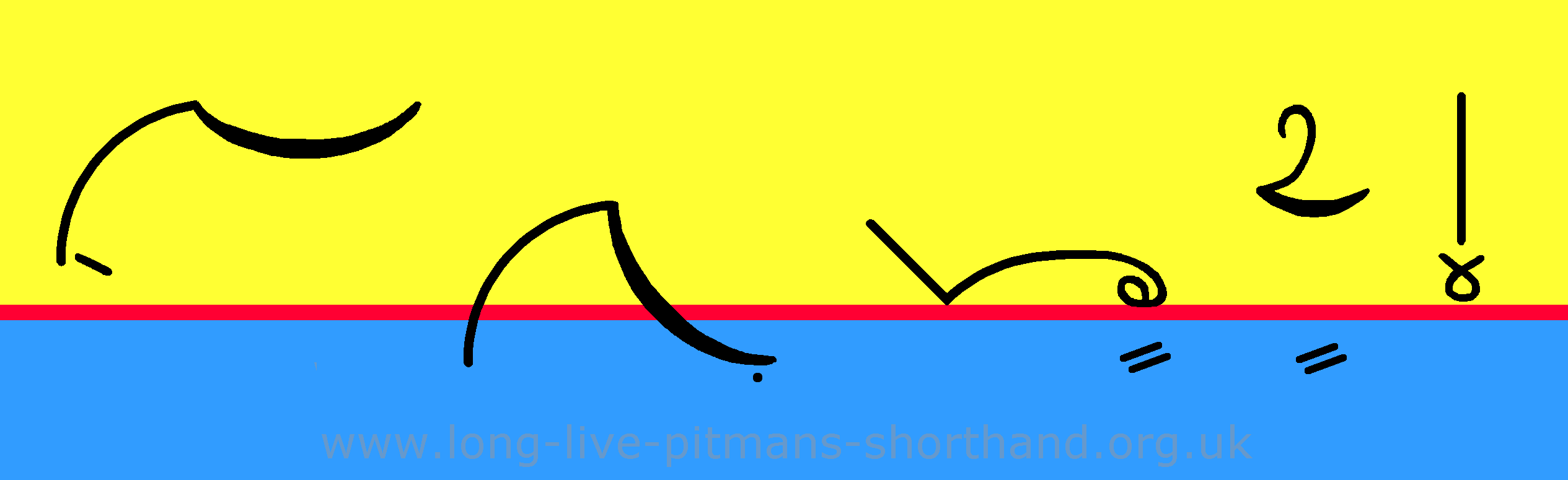
Sounds/syllables/words omitted from a phrase are underlined
2.
Change of form:
(f) R Forms
(g) L Forms
(h) H Forms
(i) W Forms
(j) Imp
(k) Non-use of Short Forms
(f) R
forms
R can be represented by
Ray, Ar or R Hook, and may change from the form used in the basic
outline:

were =
we were, they were, these were, if it were, if any were

war = world war, Cold War, man-of-war
or man o' war

or = one or more, two or more, at or about
compare on or about, out
and about
See also
Phrasing 5 Omission/or

Sir = Sir Christopher, Sir Charles, Sir David, Sir James

dare = I dare not, I dare say

door = out of doors
Note also:
outdoor, indoor

appear, appeared = it would appear, to appear, he appears, it appears
that, they appeared

power = power down, power tools
also
power-house,
power-station, power-point/Powerpoint
which are compound words
Top of page
(g) L forms
L can be
represented by upward Ell, downward Ell or L Hook. In a
phrase, an outline with upward Ell may change to downward to
achieve a better join:

else less = anything else, nothing is less*, less than, any
less than, not**
less than
*See also
Phrasing 6/Essential Vowels/else less
**Insert the vowel in "not" or write it separately

longer = it is no
longer, any longer,
no longer than

elsewhere = where else, somewhere else

anywhere else,
nowhere else,
everywhere else

like =
anything like, nothing like, something like

I would like, I would
like to know

let = let us, let us say, let us see, let us know, please let us
know, let us have, let you, let you have

your letter, your last letter, your recent letter, this letter, in our last letter

line =
in line, for this line, online, inline skating

will =
he will, they will, you will, this will

sale,
old =
for sale, this sale, years old
Top of page
(h) H forms
H can often be
safely omitted from common words in a phrase:

hope
= I hope, we
hope that, we hoped that, let us hope that, would hope, we would hope

home
= at home, at home
and abroad*,
at home and overseas*
*These two do not need the vowel, as they have
more information in them

house
= of the house,
by the house,
in the house, for the house, lower house*
*Dot Hay and vowel shown for reference

in this house*,
upper house, custom house "housing" is clearer in full:
housing market
*Large Circle used to represent two
small circles, compare "Theory
12 Hay/clotheshorse"

history
= for the
history, in the history of the

happen
= it has
happened, what has happened, would happen*,
would have been**
*Dot Hay and vowel shown for
reference. **See also
Phrasing 2/have been

freehold, leasehold = freehold property,
freehold land, leasehold premises
Tick omitted:

hear hardly = hear hear,
there is hardly

whom = from whom (insert vowel)
compare from me, from him
Top of page
(i) W forms
W can be represented by
Way, Wel or W Semicircle or omitted:

was = this was, that was, never was, if it was, another was

were =
nor were they, when were/when we are,
if that were
W Semicircle omitted:

such were, such as were,
you were, if he were, if he were not, who were

as it were, which were, there were, those which were, how were, I wish there were
"what were" needs both outlines in full,
because if you left out the second semicircle sign, the
phrase would be identical to "were":

what, were = what were
Omitting the hook on Wel:

will = I will, you will, if he will,
they will, she will

as it will be, such
will, such as will be, for it will have, if it will, that will not

those will, this will, these will, this will not, as long as will

But the hook joins well
in:
we will,
where will, and will, anything will, something will be
Do not use the plain
Ell for the noun
"will" (both meanings: force of mind, and legal document)
or the verb (meaning to bequeath):

Their will to succeed is very strong. If you will him the house, he will be
glad.

This Will is not signed. Their Will was in the drawer.

Only exception: last Will and
Testament Vowel helpful
The noun Will, referring to the legal document,
is often written with a capital letter to prevent misreading and
misunderstanding.

well = very well*, it may well be,
it may very well be, he may well be
*Vowel advised, see
Phrasing 6/Distinguishing pairs/well
low ill
Top of page

you may well, you may as well, it is well known, so well
Always insert the semicircle sign if it helps

war = of war, throughout the
war, during the war, before the war, civil war

wear = evening wear
knitwear*
underwear footwear*
sportswear
* Add the vowels shown for clarity

wire = live wire, earth wire, electrical wire

word = this word, these words, several words, another/in their
words, many words

following words, in those words, in
these words, Holy Word, God's Word

world = this world, another/in their world, civilised world

all the world, in the world/any world, all
over the world

work = of the work*, for the
work, with the works, this work
*Vowel shown for reference

worse = any worse, no worse, no worse
than, none the worse

worth, worthy = not worth, it is worth, local worthies

to be worth, worthwhile, be worthwhile, not worthwhile
With, when, what, would:

with the, with us/his, with you, with me,
with it, with which, with them, with their

when the, when is/has the, when do/had*, when they, when that, when
you, when he, when we, when would
*If necessary, you can indicate that it is "had" by inserting Dot Hay
and the A vowel, see Phrasing 7/had
not

what the, what is/his/has, what is/has the, what is/has
your, what you/what would, what can, what had, what do, what have/whatever

would the, would his, would you, would
he, would be, would it, would she, would have

it would, which would, you would, he would, she would, I
would, we would, they would, this would
Top of page
(j) Imp
In the following, Imp is used for M+P and M+B even
though the
sounds are in different syllables:

for
some time past, for some considerable time past
compare
tempest, lamp-post

legislative assembly =
legislative assembly
(k) Non-use of short form
Where the original short form outline does
not join:

called = so-called*,
was called, what is called
compare
miscalled
*Vowel helpful

first = first rate, at first sight, at first,
at first hand
compare first
hand, first class, first quality

from = from the first, from
first to last

hand either other = on either hand, on the other hand,
compare on their own, they
are not

our = in our OR
nor, in our way, in our opinion, it is in our
interests

in our world, in our reply, in our hands

are = they are, and they are, for they are*,
if they are*
*See also
Phrasing 6/Distinguishing pairs/if for
"Much" in some phrases is written with the stroke Em
to enable it to join:

much = so much, how much,
to/too much, was as much, there is much, very much

Compare so large, how large,
very large

more = much more, much more
than,
very much more than, so much more than

herewith = enclose herewith,
I have enclosed herewith, send herewith
These are safer with the W vowel
shown, to distinguish from "them", but still quicker than separate outlines.

what = I know what, have what we can, that is what, somewhat*
*Vowels shown but not
essential. This is semicircle W for "wo-" vowel, rather
than the short form "what", note also the Dot Hay against it.

would = we would, I would,
this would, some would, many would, if it would

was = this was, if it was,
I think it was the, why was the
word = this word/would, these words, several words, in other/in
their
words, many words

my own words, in our own words,
satisfactory words

year = this year*,
many years, New Year**,
another year
*This awkward change of direction is avoided
wherever possible, and not used in basic outlines, but this phrase is still quicker than
separate outlines.
**Keep the Yay+Ray stroke long, as this is
similar to the contracted phrase for "New York" (N+Yay)

yard = many yards, several
yards, back yard, coal yard

Use the short form if it joins well:
two yards/words,
three yards/words, hundred yards/words
Top
of page
|